
Jeremy Enigk on AOL’s the Interface

Thank God Stereogum has time to track down all things music on the interweb else I might have overlooked Jeremy Enigk’s in-studio performance on AOL’s the Interface.

Enigk, whose first solo album in 10 years, World Waits, I’m slowly absorbing one song at a time, played five tracks here, including Sunny Day Real Estate’s How it Feels to Something On. It’s still a little bit hard to separate Enigk solo from Enigk as Sunny Day frontman, difficult to accept that. That feels like a natural reaction, although I’m not down on World Waits at all. For whatever reason, I seem to be digesting it slower than other albums of late. Probably because I want to be measured in my reaction to it.

Kudos to AOL for a great interview, too. Enigk said his live show consists of a five-piece band with five or six songs from Return of the Frong Queen, five or six from World Waits, a song from the United States of Leland (score for the movie) and “maybe even a little bit of Sunny Day Real Estate.” He also spoke of the Fire Theft (his post-SDRE project) just being a studio band, and releasing a future record on his Lewis Hollow label.

(On that note, Enigk is opening for Cursive, including Oct. 31 at Marquee Theatre in Tempe and Nov. 1 at Rialto Theatre in Tucson. See Stateside Presents for ticket info.)

As for the title World Waits, Enigk said, “there’s so much hatred and there’s sickness and there’s war … and what’s the world doing? Everybody knows this stuff is bad, but we keep on doing it, and what are you waiting for? We’re aware of how to make a difference but it’s just not moving in that direction.”

I’ve spliced the Interface performance into individual mp3s. For the full download (with interview), go here.

Jeremy Enigk, AOL’s the Interface:

1. River to Sea
2. Lewis Hollow
3. Explain
4. World Waits
5. How it Feels to be Something On

Previously:
Jeremy Enigk: “World Waits”
New Busdriver: “Kill Your Employer”

For the most part, fast-rapping (for lack of a better term) has been nothing short of a gimmick. Twista and Bone Thugs-N-Harmony come to mind. The ploy might have even worn thin with the great Das EFX, who made “iggity” a standing suffix to just about any word to create, well, made-up words.

Enter Busdriver, the Los Angeles-based emcee who raps at warp speed but manages to remain literate while doing it. If you’re not used to his style – intellectual and ambitious, to say the least – it might come off as dense. His lyrical pace can be maddening and amazing all at once.

For his new record, RoadKillOvercoat (due for release early next year), Busdriver has signed on with Epitaph/Anti-, which is turning leftist, avant-garde hip-hop into its own little cottage industry (Sage Francis, Blackalicious, the Coup, etc.).

The first single, Kill Your Employer (Recreational Paranoia is the Sport of Now), features production from LA’s Boom Bip that borrows elements of drum and bass, electronica and hip-hop and a chorus that’s sneaky in its catchiness.

Anyone up to the task of actually transcribing the lyrics?

Busdriver | Kill Your Employer (Recreational Paranoia is the Sport of Now)

Ratatat, Rhythm Room, 9/25/06

So I raced over to the Rhythm Room after work Monday night to catch about 40 minutes’ worth of Ratatat’s set, which was enough time to form an opinion and settle a debate I’ve had with myself about one of life’s most puzzling questions: Do I like Ratatat?

The answer: not so much. Classics, the group’s latest release on XL, was doing just enough to keep me interested. Truth is, I’m a hard sell when it comes to all-instrumental albums (unless we’re talking straight jazz, of course). I like my indie rock with words. Still, the beats on Classics lured me right into that mouse trap of a live show.

After about two songs, my eyes glazed over – which might have had a little something to do with the stage fog overkill. I wanted to like Ratatat. I really did. But, at its core, this is a jam band masked by the electronic label, which means the sweet-banged indie kids have an excuse to pretend to dance.

Each song started the same way – with a taut, crisp and appealing beat – before devolving into this somewhat obnoxious cacophony of blinding lights, stage fog and Steve Vai-esque love-making to the fretboard. As if your senses weren’t paralyzed already, a projector played a running visual show behind the band, sometimes in sync with the music, which at least suggests a form of choreography to it all.

All of the superflous stage gadgetry – fog, glaring lights, visuals – is less a complement to the music than it is a distraction. What you really had to ask yourself is if it weren’t for all the accompanying bells and whistles, could the music stand on its own and engage the audience?

The guitar playing of lead man Mike Stroud (at least he seemed to be the lead man) comes off as overly ironic – head-banging with his long hair, windmills (a la Pete Townshend) and back turned playing to his amp. (Maybe someone has a crush on Jim James?) Then when he talked to the audience he did so with echo effects still on his mic, which made it impossible to hear what he was saying. Ha. Funny. I guess.

It’s possible, as Annie and I discussed afterward, that we’re getting older and with that comes impatience. Even Built to Spill, one of my favorite bands, can annoy me with Doug Martsch’s jam-band noodling on stage. But at least I have something else to hold onto there: words, lyrics, meanings. I didn’t feel any sort of connection like that with Ratatat.

On the upside, Annie says openers Panther and Envelopes are worth checking out.

Ratatat on MySpace.

mp3: Panther | You Don’t Want Your Nails Done
Panther on MySpace.

Envelopes on MySpace.

I Used to Love H.E.R.: Pigeon John

The third installment of I Used to Love H.E.R., a series in which artists/bloggers/writers discuss their most essential hip-hop albums (read intro), is written by LA-based emcee Pigeon John, a newcomer to the Quannum roster with his recently released Pigeon John and the Summertime Pool Party, available at eMusic. Much like the album and group he writes about, Pigeon John exudes an easygoing and sometimes humorous style that still makes a relevant point. … And the Summertime Pool Party includes “scenes,” much like De La Soul’s habit of conceptual skits.

mp3: Download Higher?! from … And the Summertime Pool Party.

De La Soul Is Dead (Tommy Boy, 1991)
Produced by De La Soul and Prince Paul

“I’d have to say that De La Soul’s De La Soul Is Dead is probably the most potent hip-hop CD in my collection. It was beautiful and tragic, that album. They dropped it right after their biggest cross over debut 3 Feet High and Rising, which pretty much redefined what hip-hop was and could be in 1989. They hit a bunch of success with their first record and hit Me, Myself and I, so much that people wrote them off as “hippie rappers,” “postive” and “soft.” Silence was loud when they gone. Then out of nowhere … BAM, De La Soul Is Dead. An international response to their international backlash.

“They were the first to make fun of themselves, use the weirdest samples imagined and break ground with almost every song and verse they laid. There was no one like them. No one.

“My favorite song on that record was Millie Pulled A Pistol On Santa, a document of a young high school girl who was being molested by her dad. The same dad that all her friends thought was the coolest dad in town. She tried to tell her friends what was happening and everyone wrote her off and said she was bugging. The abuse continued until this young lady went into the same mall her dad worked as a makeshift Santa during the holidays. She confronts him. Then calmly, in the cold broad day, shoots her father in the middle of the mall. The song was written like a gossip letter by one of her friends that didn’t believe her. Now come on man … that’s hip hop. The first time I got chills listening to rap.

“Now think about what the average rap song is about today and you will see how stark and ahead of their time they were. And they were only 21 when it came out.

“De La Soul broke ground wherever they walked. In the way they dressed and styled (if you have dreads today, they are the reason you do), and the way they rapped, made beats and wrote concepts. De La Soul Is Dead will forever be my goal. The perfect balance between humor and tragedy … big up to De La and their 18-year career (another ground-break in rap).”

De La Soul | Millie Pulled a Pistol on Santa

BONUS:
De La Soul | Millie Pulled a Piston on Santa (full mix)
(From Millie “cassingle”)

(On a side note, I’m really stoked that Pigeon John picked Millie as his favorite track. For a public speaking course I took at Arizona State, we had to do an oral reading of a poem. I picked De La’s Millie Pulled a Pistol on Santa, successfully convincing my professor that hip-hop is poetry.)

Previously:
I Used to Love H.E.R.: Joel Hatstat of Cinemechanica
I Used to Love H.E.R.: G. Love
I Used to Love H.E.R.: an introduction

This week’s to-do list

Lots of good shows coming through Phoenix this week and the coming weeks. A quick rundown for this week:

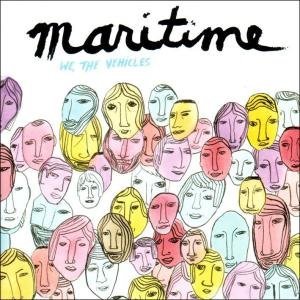
I’ll be hitting Maritime on Tuesday for a couple reasons: 1) I enjoy Maritime’s latest, We, The Vehicles; and 2) I still haven’t seen locals Reubens Accomplice, which, frankly, is embarrassing.

Maritime | The Future is Wired
Download Maritime’s Daytrotter session.

Oh No: “Exodus Into Unheard Rhythms”

Concept albums are nothing new in hip-hop. A few come to mind right away: Deltron 3030 (Del the Funky Homosapien and Dan the Automator), anything by Kool Keith (or one of his many aliases), Prince Paul’s A Prince Among Thieves and, you could argue, De La Soul’s De La Soul is Dead.

These projects are concepts in terms of a unifying theme in their writing. On Exodus Into Unheard Rhythms, released in August on Stones Throw, Oh No flips the script a bit. The album’s unifying element is its source material. Oh No (younger brother of producer Madlib) constructed the beats and music using samples derived solely from the work of Galt MacDermot, best known as the composer of Hair.

Stones Throw general manager Egon briefly worked at MacDermot’s label, Kilmarnock Records, in the ’90s and has since issued compliations of MacDermot’s work on Stones Throw.

As you might imagine, the production on Exodus is vibrant and rich, the glue holding together a pretty insane and varied cast of emcees and singers – Buckshot, Murs, De La’s Posdnuos and Aloe Blacc among them.

If nothing else, you have to appreciate Stones Throw’s continual dedication to pay homage to the past. Oh No is showing off not only his own craft but that of a composer he obviously admired enough to introduce to a new generation of fans and listeners.

Oh No feat. Posdnuos (of De La Soul) | Smile a Lil Bit

Exodus Into Unheard Rhythms is available at eMusic.

Channels: “Waiting for the Next End of the World”

J. Robbins (formerly of Jawbox and Burning Airlines) has his fingerprints on so many projects I like – and even more I like that, until recently, I never knew he took part in (namely, production and mixing on Maritime’s Glass Floor and Jets to Brazil albums). His resume, particularly on the production end, is extensive.

Channels is his latest musical vehicle, a three-piece on Dischord Records that released its debut full-length Waiting for the Next End of the World in August.

Like his writing in Burning Airlines, Robbins straddles a line of paranoia with Channels that leaves you edgy and uncomfortable, a trait he shares with Jets to Brazil frontman Blake Schwarzenbach (see also, Orange Rhyming Dictionary). Robbins doesn’t meddle in the ways of love and heartbreak; his songs are the soundtrack to media and government fearmongering.

To the New Mandarins, the opener on Waiting for the Next, sets the tone of his dread laced throughout the album:

“new mandarins, your color-coded bulletins /
are doing my poor head in /
while you place bets on what I’m most dreading /
so well-informed, I don’t know where the truth begins /
I grew up on science fiction /
that doesn’t mean I want to live in it”

Robbins is a protest writer in a more indirect sense, in the way Blade Runner and THX 1138 envision a dehumanized society. Paranoia drives Robbins, and that makes him compelling: misinformation, Big Brother, technophobia. He’s asking you to think about this for yourself and consider the consequences.

Burning Airlines’ Mission: Control! (1999) clocked me over the head when I first heard it after graduating from college. (Looking back, the band’s name even seems eerily prophetic; Robbins almost changed the band name.) I didn’t know what to make of these lyrics and ideas: “The medicine show comes around / to peddle a prescription now / to medicate mistrust of crowds.” Whoa, whoa. This wasn’t about missing your girlfriend or feeling homesick anymore. For me, Robbins was expanding what songwriting could be – an expression of fear or concern in a way not related to mopey love.

Channels carries the tradition, even if the post-punk musical styling feels dated. Though I’d argue that the unnerving guitars and Robbins’ ever-so-slightly distorted vocals contribute to the message in the writing.

Channels | To the New Mandarins
Channels | Storytime (In the Street of Spies)
(From 2004 EP Open)

Related:
J. Robbins recently shuffled his iPod for the Onion and is slightly humiliated when it turns up a Burning Airlines song.
MP3s of Robbins’ work (via JRobbins.net)

Lupe Fiasco: “Pop Pop” (2003 promo single)

I was pretty excited to go out yesterday and buy Lupe Fiasco’s Food & Liquor. Coincidentally, the CD/record/DVD haul I brought home from Los Angeles included a promo 12″ from Lupe for the song Pop Pop. I can’t reveal my sources of this vinyl donation, but it was the first thing I put on the record player when we walked in the door.

All I could find out about the song came from the Wikipedia entry on Lupe, which says Pop Pop was the only tangible output from a short stay at Arista in 2003. It also might have appeared on the Lupe the Jedi mixtape, though I can’t confirm that. Can anyone help out?

Dearth of information aside, it’s a little surprsing this track didn’t find its way to mainstream ears (or maybe it did?). At the very least, the club-friendly beat covers some of Lupe’s lyrical inadequacies of his greener days: “I’m knowin’ I ain’t the hottest nigga out / got that fire though / you gonna have to put your hottest nigga out.” Shouldn’t rhyming the same word – or in this case, the same three words – in a verse be outlawed at this point?

Lupe Fiasco | Pop Pop
Lupe Fiasco | Pop Pop (instrumental)
Lupe Fiasco | Pop Pop (acapella)


Also, Rogue Wave is holding a benefit show Sept. 30 at the Independent in San Francisco for its drummer, Pat Spurgeon, who needs a kidney transplant. According to a MySpace bulletin, there will be performances by Rogue Wave, Ben Gibbard, Matthew Caws (Nada Surf) Ryan Miller (Guster) and John Vanderslice.Buy tickets here. Or you can make a donation via PayPal through the group’s Web site.

Phoenix, Martini Ranch, 9/18/06

This may be a rhetorical question, but … Why isn’t Phoenix everywhere yet? From CD to live show, this is a band that is polished, tight and unquestionably brimming with potential. Seriously, get the producers of The O.C. on the horn now.

Phoenix was almost so flawless on Monday night that I found it unsettling. When a band feels so impenetrable, you try hard to find something at which to pick. The only thing I could come up with was that singer Thomas Mars came out in a peacoat. A peacoat?!? It’s still like almost 100 degrees outside. Of course, he shed it during the first song, Napoleon Says (must have been on the set list: “strip peacoat in first song.”). Oh, and he was skinny. Really, really skinny. Jerk.

The band’s set was either impeccably tight or soul-lessly choreographed. I’m leaning toward the former because I don’t want to feel like I’m that jaded quite yet. Even when Phoenix appeared to be playing off the cuff a bit, it had the feeling of being well-rehearsed, which, I realize, is probably a lousy thing to nitpick. The band is as clean and civilized as you could hope, and I was pleased to see Phoenix be bold enough to play the hit single (Long Distance Call) second in the set list and still hold sway over the crowd throughout the night.

Honestly, my only complaint was with the venue, Martini Ranch, which usually is reserved for horrid cover bands (are there any other kind?) and superficial Scottsdale outings. The lighting, especially those terrible stage spotlights, was obnoxious during Phoenix’s set; it’s the band that’s not supposed to be able to see the fans, not the other way around.

Phoenix | Everything is Everything (live)
(From an Astralwerks compilation passed out at the show)

(Thanks to Forrest for providing the digital camera for the evening.)

The Gray Kid, Project art gallery, 9/16/06

In lieu of heading to Austin for this year’s ACL Festival, Annie and I took off on a secret trip to Los Angeles. We played with our little 5-month-old nephew (kid loves me) and managed to make it out on the town Saturday night to check out the Gray Kid at Project. (OK, so the $10 donation for the open bar was a draw, too.)

Ben recently turned me on to the stylings of the Gray Kid, and within a day I bought his album, … 5, 6, 7, 8, saw him live and chatted him up about playing a show in Phoenix. Screw LA, man; you haven’t made it till you play Phoenix, damn it.

At first blush, you wouldn’t take the Gray Kid for the lyric-spittin’, beat-makin’ hip-hop machine he is. On Saturday, he was decked out in jeans and a black-and-turquoise thrift-store sweater with a bandana fashioned around his neck like an ascot.

But his beats. Lord. No white kid possibly could be responsible for those. On stage, the Gray Kid flies solo, backed only by his iPod, on which he’s sequenced the music for his entire set.

If his rig limits any sort of improvisation, the Gray Kid compensates with his arm-swinging, sweaty energy. I say sweaty because he was wearing that damn sweater: “Is anybody else wearing wool in here?” That was funny.

He spent a majority of the set standing (and stomping) on a foot stool, like a street-corner preacher yelling off the microphone and flailing his arms to implore the gallery-goers, many of whom were innocent bystanders checking out art but instead got caught up in the flurry.

What can’t be overstated about the Gray Kid’s stage presence is his level of interaction with the crowd – and, in this case, the artists working on a live mural during the show. Granted, performing in the corner of an art gallery on a makeshift stage affords a more personal experience than any club show. But the Gray Kid walked through the gallery whilst singing and (gasp!) made eye contact with fans, even if maybe it made them a little uncomfortable.

Oh, about the music? He’s a bit of a chameleon – singing falsetto one verse, rapping the next. It’s mostly unpredictable. What do you say about a guy who can rap that he’s got a “dick like a comet” (Like a Comet) and then lay out soulful crooning (Lonely Love) without a hint of irony? (And he goes unplugged, too.)

But do yourself a favor. Buy … 5, 6, 7, 8 and listen to One Question, a dis track that’s worth the cost of admission alone when he claims, “labels couldn’t hold me like a charge on cheap phone.”

The Gray Kid | $$$Clip