Category Archives: hip-hop

My vinyl stash just became unbelievably awesome

I should probably be playing the lottery instead of blogging, but I was too excited not to share.

Made one of my customary Zia Records runs on Monday night only to stumble across Run-DMC’s King of Rock on vinyl for $1.99 and Public Enemy’s It Takes a Nation of Millions to Hold Us Back for the steeper $8.99 (but you’d buy it, too). Far as I can tell, It Takes a Nation isn’t a reissue either.

Can’t even describe how happy I am feeling. Yeah, the cover is unglued a little on King of Rock LP. But whatever. Now I will be in search of Tougher Than Leather on vinyl, a holy grail of sorts.

To celebrate the find, here’s a bonus track from the CD reissue of King of Rock: the demo version of Slow and Low, which Run-DMC eventually handed over to the Beastie Boys. (Soul Sides had some words about it a couple years ago.)

  • Run-DMC | Slow and Low (demo)

Pitchfork Festival sampler at eMusic

Pitchfork has teamed up with eMusic to promote its festival in Chicago, July 13-15 this year. We went last year and had a ton of fun (Spank Rock’s set was amazing). Not sure if we’re going this year. The bank is being drained by trips to Michigan (this weekend for a wedding) and New York (in September for a wedding). Though the thought of GZA performing the whole of Liquid Swords is almost enough to take on a little debt, eh?

In any event, eMusic is offering a 16-song free sampler of some of the artists at this year’s festival, including the Ponys (awesome), Menomena (awesomer) and Cadence Weapon (awesomest).

Get the sampler here. I’ll even help you get started.

And here’s the video for Sharks:

And now I’m off to Michigan.

Guilty Simpson: Man’s World

Stones Throw is stepping up its already-fantastic podcast by starting to offer single-track episodes.

The first comes from Detroit’s Guilty Simpson on a track called Man’s World, produced by the late/great J. Dilla. The sample borrows – perhaps a little obviously – from James Brown’s It’s a Man’s Man’s Man’s World. Though for all the James Brown samples out there, I’m not sure I’ve heard this one used.

Guilty Simpson (one of the best MC monikers out there?) uses the sample as an autobiographical hook about growing up, maturing and feeling out his relationship with his dad. “I was his son but ya didn’t really know me / I lived life pretending things was rosy.”

Subscribe to the Stones Throw podcast via iTunes. In case you were worried, you know Stones Throw comes correct: The Man’s World mp3 comes through at 160 kbps.

Check out the Stones Throw jukebox for more, including Jaylib’s The Mission (Stringed Out remix) from the Champion Sound reissue (released June 19).

El-P: Smithereens (Alternate Mix)

My new favorite shirt.

“All he ever does is post El-P.” Yeah, I know. But if you picked up I’ll Sleep When You’re Dead, you’d understand.

Anyway, when we saw El a couple weeks ago in Tempe, the folks at his merch table were passing out cards for free downloads, which included an alternate mix of Smithereens. This version strips out the horns and manages to sound even more eerie and sci-fi than the original.

Check out El-P on Conan O’Brien on Monday.

Bizzart: Stumbling Blocks

I was doing some researching/listening on upcoming local shows when I came across a potentially intriguing night at the Trunk Space in downtown Phoenix.

On Saturday, the art venue is hosting a screening of the documentary 40 Bands 80 Minutes, about the LA noise scene, then having a few acts perform, including Bizzart, of which I knew nothing about until I visited the group’s MySpace. Bizzart is featured in the doc, and as you might expect, the group plays it coy and ironic in writing its bio and influences.

“BIZZART is now a quintet consisting of the following flute/ Xylophone, trumpet/visual media, guitar, percussion, Field recording, junkdrumming…”

“Junkdrumming.” I actually sorta like that description. In trying to determine if Bizzart is one person or more, I’m still not sure: “Bizzart is not just one person but rather it’s own entity used as a way of expression. I’ve used this entity to get passed many of my own personnal struggles by creating a sound.”

Ooookay. Nevertheless, judging by the two songs on the group’s MySpace (both available for download), there’s a strong hip-hop influence, especially on Stumbling Blocks, and I’m always down for that. I might even be tempted to pick up Bloodshot Mama on eMusic, if only for the name of the album.

So check out Bizzart with Lacoste and local fracture-pop maestro Treasure Mammal at the Trunk Space.

  • Bizzart | Stumbling Blocks

Phat Kat: Cold Steel

phatkat.jpg

I recently read a little bit about Detroit rapper Phat Kat, the first time I’d heard of him, which is fitting seeing as how that story details his success in Europe and relative obscurity in the U.S.

Analog Giant already has been up in your face about fellow Detroit emcee/producer Black Milk, who makes an appearance on Phat Kat’s Carte Blanche, released last month on Look Records.

Phat Kat (aka Ronnie Cash) not only name-checks Phoenix, AZ, on Nasty Ain’t It, he also has worked with J Dilla, so you probably shouldn’t need any more proof to check it out. But if you do, Cold Steel (courtesy Spinner) should set you straight. Have you ever heard such a menacing bass line?

  • Phat Kat (feat. Elzhi) | Cold Steel

TONIGHT: Finally. El-P is at the Clubhouse in Tempe. Get your tickets. I was fortunate to talk to him for my day job. Check it out.

I Used to Love H.E.R.: Jamie Radford

The 13th installment of I Used to Love H.E.R., a series in which artists/bloggers/writers discuss their most essential or favorite hip-hop albums (read intro) comes from Jamie Radford, a Georgia-based hip-hop artist, lawyer, freelance writer and general Internet impresario. Jamie responded quickly and intelligently when I asked him to take part, and he schools us on the South.

Jamie Radford on MySpace | Jamie Radford’s blog | Jamie Radford at Last.fm
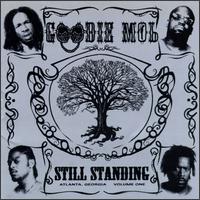
Goodie Mob
Still Standing (LaFace, 1998)

“Still Standing” was one of those albums that hit me kind of late. It was something I bought early on in the history of my hip-hop fan-dom, probably because I found a used copy of it at Troy, Alabama’s only CD store, and I had heard “They Don’t Dance No Mo'” on Montgomery rap radio. And for a long time, it sat in its case, in my stack of neglected CD’s, until one day I randomly put it on, looking for some new sounds for my ears. I remember lying in my bed, half-asleep, just letting the music wash over me, when “Black Ice” starting floating through the air, and I was unexpectedly moved.

I say “unexpected,” because, at the time, South Alabama was being slammed with rap records out of New Orleans and Memphis: hard-hitting, instantly gratifying, glossy beats under drawled out hooks and shouts. For some reason, I had put Goodie Mob in the same mental compartment as these other Southern acts – like Atlanta’s version of Tru or Three-Six Mafia or something. I mean, they had “Mob,” in their name, and “They Don’t Dance No Mo'” usually followed “Make ‘Em Say Ungh” on the radio, so, why not?

But “Black Ice” was so smooth, and the raps were so … mentally stimulating. Listening to other Southern rappers, I had never been struck with the sense that rapping was a very difficult skill to acquire. But the opening verses were so complex, so quick, and what was this beat? This light organ floating in the background, these carefully placed kicks, this tick-tick that I sort of recognized. And then Gipp’s verse, then Big Boi’s, then.. holy shit.. Andre Benjamin’s. This was actually one of the first moments at which I really listened to either member of Outkast in this kind of light. This was probably the most skilled rapping I had ever heard.

When “They Don’t Dance” came on, I noticed elements I had never appreciated about this record. That little synth sound popping in the background, the depth of the verses. Then “Beautiful Skin!” Who was this strange-sounding rapper with this amazing verse about skillfully chatting up a dignified woman at a respectable singles joint? Was there other rap music out there like this? Needless to say, in the next weeks I got my hands on every Dungeon Family album available (Witchdoctor’s ” S.W.A.T. Healing Ritual, another favorite; Cool Breeze’s joint; all the Outkast albums available to date; the first Goodie Mob album). And for a while, these albums became permanent fixtures in my listening–I had been looking for a replacement for the Nirvana albums that had previously gotten me through each day, and I had found it. There was a darkness, a seriousness, an emotion in Goodie Mob that the other hip-hop I listened to hadn’t provided. It was a brand new kind of music.

The production on “Still Standing” is something that is still rare on hip-hop albums. The beats, like other Southern rap albums, are slow, with a prominent tick-tick double time represented in nearly every song. The vocal delivery has as much to do with inflection of the voice as with the content of the rhymes. But there’s also something unique about it. The samples are typically light and smooth (like the guitar part on “Beautiful Skin” or the brief piano and string hits on “Gutta Butta”), rather than the synth-blasts on No Limit or Cash Money records. The vocals have a heavy level of reverb, spreading the sound out throughout the beat, and smoothing out the overall mix.

And the lyricism is among the most complex recorded to date. Both Cee-Lo and Khujo’s raps take the form of fairly straightforward, interesting narratives, but both T-Mo and Gipp fill their verses with rhyme-heavy, drawled out word-pictures, packed with meaning and open to interpretation. Topping it all off are a couple of highly-memorable verses by Cee-Lo, most notably the tragic story of drug-dealing and prison at the end of “I Refuse Limitation” (which is also one of the most compelling hip-hop beats ever crafted), and the car-jacking tale in “Gutta Butta” (“I value both of our lives more than this here car!”).

“Still Standing,” along with the Fugee’s “The Score” is the album that most contributed to my love of and respect for hip-hop. And its still the album against which I sound-check all my own music: trying my best, usually in vain, to match the balance of bassy lows and stimulating highs, the level of reverb on the vocals, the gain on the snare. And now that I’ve moved to Atlanta, the album has acquired more meaning, as I pass by the name-checked streets and landmarks, and begin to better appreciate the city that inspired this music. I will forever remain in awe at the skill and attention to quality that went into this album, and can only hope that, in my own music, I maintain the integrity that Goodie Mob did in crafting “Still Standing.”

  • Goodie Mob | Black Ice

RJD2 with Pigeon John tonight

Here’s a show you should go to because, well, I can’t. This is the last time I miss a show for work (foreshadowing … semi-major announcement pending).

RJD2’s new record, The Third Hand, got panned in Pitchfork. And I can’t say I necessarily disagree. Still, that doesn’t diminish the great work he’s previously done. I think I could whittle down The Third Hand to about five or so tracks worth keeping.

Then there’s Pigeon John. Well, I’m a big fan after seeing him live last fall. (Of course, it helps that he contributed to my hip-hop feature.)

They’re playing the Clubhouse in Tempe.

Also, Modest Mouse is at Mesa Amphitheatre.

And in a strange coincidence, Andy Rourke, formerly of the Smiths, is in town for a guest DJ spot at the Rogue. Word has it Johnny Marr could head over after the Modest Mouse show to make it half of a Smiths reunion. Except, you know, they’ll be twiddling with their iPods and CDs.