It’s difficult to balance my eagerness to post a new Open Mike Eagle song and the feeling that I need to hold off to offer a more informed opinion. I mean, it did take me about 15 listens of his first album, Unapologetic Art Rap, before I picked up on the Aaron Burr name-check in the song Rap Protection Prayer (“Hope I never have to keep me a derringer / ‘Cause I would challenge everybody like I’m Aaron Burr”).
And in Nightmares, the first single off his wryly titled forthcoming album Rappers Will Die of Natural Causes (due out June 7 on Hellfyre Club), OME appears to put the scatterbrained generation on blast: “You say the things that you overheard / I see the things that you don’t observe.” When the Internet is pulling everyone in different directions all at the same time, Open Mike Eagle seems to subtly rise above it. You just have to stop and hear what he has to say.
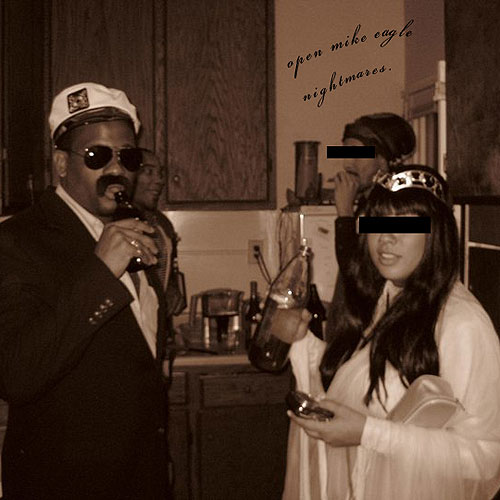
Nightmares was produced by Willie Green and a video, which hopefully involves something pertaining to that photo, will premiere Friday at HipHopDX.
If you grew up on the Beastie Boys – I was just 9 years old when Licensed to Ill came out in 1986 – it’s crazy to think that they’re in their mid-40s (closer to 50 in MCA’s case). Crazier to think that a new generation of kids might not have a clue about the group’s heyday; their first three albums are older than most current high schoolers. After posting Chris Testa’s great ode to Check Your Head, I got to thinking about the Beasties’ place in music but especially about their place in my history.
From Licensed to Ill in ’86 to today’s release of Hot Sauce Committee Part Two, no group has been as consistent and relevant. While the Beasties were around long before, I came to them (as most everybody did) when Licensed to Ill was released, which means they have soundtracked 75 percent of my living years.
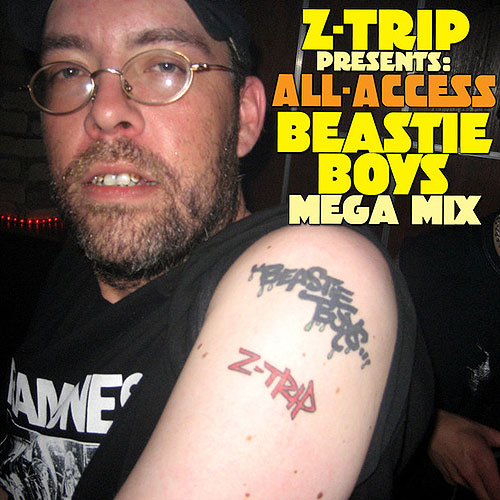
So how do you encapsulate such a prolific career in a 23-minute mix? It seems an unenviable task, but DJ Z-Trip took it head on for his All-Access Mega Mix, which is being offered as a free download. Z-Trip mines the catalog to remix classics and new material: “I was stoked and humbled when asked to do this mix. I’ve been a fan of The Beasties since I first heard Mr Magic interview them on WBLS in NY. I included some of my favorites as well as stuff off the new album.”
I wouldn’t be surprised if Z-Trip’s legion of loyal followers posted a tracklist in the coming days on his forum, but I can tell you right now that Helmet never sounded so hip-hop.
I’m not sure acoustic versions of Twilight Sad songs actually get the point across of Twilight Sad songs. The sonic pummeling of distortion and feedback is all part of the experience, especially live.
That’s not to say the songs can’t stand on their own without that. James Graham certainly writes powerful lyrics with a voice that can carry them in most any setting. Personally, I just love how their epic sound moves the needle, sonically and emotionally.
But, hey, see for yourself because the Scottish outfit is offering a seven-track acoustic EP for the small cost of your email address at its blog (or in that little widget below that sometimes takes awhile to load).
Tracklist:
1. I Became a Prostitute
2. Interrupted
3. Seven Years of Letters
4. Suck (The Wedding Present cover)
5. That Birthday Present
6. The Neighbours Can’t Breathe
7. The Wrong Car
Until seeing the Arcade Fire two weeks ago, I hadn’t been to Comerica Theatre (nee Dodge Theatre) in eight-plus years. Now it looks like I’ll be going there for a second time this year.
Death Cab for Cutie announced new North American tour dates, and they include an Aug. 15 stop in Phoenix. I’m having a hard time remembering when I saw Death Cab for the first (and only) time, though I feel like it was at the new Nita’s Hideaway with John Vanderslice, but this tour history doesn’t list that show (but it does list one with Nada Surf in 2003, so maybe that was it?).
Anyway, Death Cab has long outgrown the small-venue scene and it appears their tourmates, Frightened Rabbit – one of my favorites – might be next. If not for Frightened Rabbit’s inclusion, I’m not sure I’m willing to pony up the $32 for tickets. Can’t wait to hear how their songs carry in such a spacious venue.
Speaking of tickets, they go on sale May 7, but Stateside Presents is having a pre-sale on May 2. There’s a Death Cab pre-sale Friday, but you must belong to the fan club, and only Zooey Deschanel likes Ben Gibbard that much.
You can get a taste of three new Death Cab songs below, all of which will be on their May 31 release, Codes and Keys.
Phoenix rapper Random, who has to be one of the busiest and most prolific musicians in the Valley, is about to find himself with a lot more time on his hands. The self-proclaimed “TeacherRapperHero” took a brave leap of faith by resigning as a middle-school teacher to focus on his music career full time.
I hope to catch up with him about this soon – maybe over some grub at The Main Ingredient – because I have a ton of respect for him being a teacher (a career path I’ve often thought about pursuing) and even more for walking away from it to chase his dream as a musician.
But it seemed like a good time to bring it up because now that his teaching stint is officially over, Random is already coming up with creative ways to inspire and connect with fans. He’s creating a reality show of sorts called Life After Lesson Plans, a web series that will chronicle this next step.
The 10-minute pilot – which shows, among other things, Random and Black Materia producer Lost Perception signing and packaging CDs to ship (such a glamorous life!) – premiered a few days ago and it’s a great introduction into the mind of one of the most accessible and down-to-earth guys you’ll come across.
So congrats to Random, and this only underscores why it’s so important for fans to support artists they like.
The 53rd installment of I Used to Love H.E.R., a series in which artists/bloggers/writers discuss their most essential or favorite hip-hop albums and songs, comes from Los Angeles-based producer/mixer/engineer Chris Testa, who won three Grammys for his work on the Dixie Chicks’ 2006 album Taking the Long Way.
I’ve pestered Chris for a while now about doing this, and it turned out to be worth the wait. Just when I thought that maybe he’d forgotten, he emailed me this obviously passionate post about an album he calls “hip-hop’s most creative record” – on the exact 19th anniversary (April 21, 1992) of its release, no less.
Beastie Boys, Check Your Head (Capitol, 1992)
I was high the first time I heard Check Your Head … in my friend’s car at a party in Jersey. He had bought it and was freaking on it. I remember walking down into the basement of this party and seeing him see me and stop the cassette player, hit eject, grab a cassette and say, “Dude, you gotta hear this!” We went out to his car, smoked one and I heard it for the fist time. It was so fresh … so FRESH. The first track was more creative than most full hip-hop records (although calling it hip-hop could just be limiting what it really is). It’s one of the funkiest records of all time. Completely done in their own style, taking a real understanding of the past and totally doing something new with it. I feel in some way every great hip-hop record is basically a tribute to yourself and how “bad” you are. They’re proving grounds, but it was really about how creative you can be that makes Check Your Head the top contender. The thing is that the Beasties got their groove, whether it’s programmed music, fully live, or just a DJ, but their decision to start playing more themselves (and the brilliant production of Mario Caldato Jr.) just enforced their style on all parts of the sounds. This was the first record where everything coming at you was them (any samples seem more like them sampling themselves, minus the super obvious ones). It was a huge leap into a totally different thing than anyone expected. Most people never even knew they played. It was awesome to see “Bass: MCA, Drums: Mike D and Gtr: Ad-Rock”. I didn’t know what to think … all I can remember was a state of disbelief that their playing was something they just hadn’t shown us yet. How often are you that surprised by what your favorite bands do? I have an answer – rarely ever. At the time I was heavily into all of the pioneers of funk like James Brown, Sly Stone, P Funk, the Meters and every other band that introduced the word to the deep groove. The Beastie Boys were just like a lot of their heros from the ’70s, innovators in their time by making something new of that past … they had it all together. If you look back now at their clothes, their guitars, their fucking drum heads for that matter … all totally new and different from what was going on at the time, yet a total homage to everything that was cool in the past. They were reinventing, and it was dope.
There’s so many things that the Beasties really innovated with Check Your Head. It’s hard to think of just one, so I’m going to break it down:
Their humor
I think one of the main things that everyone related to that existed through all of their records was their humor. Let’s face it: They were funny at shit. Just watch any video. It’s not easy to take something that’s initially funny and twist it into something cool, but they managed to do that all the time. I mean, “The Biz v. The Nuge”… I mean, Biz Markie was a decently big rap star at the time, but Ted Nugent, he had nothing going on. It’s almost like what Quentin Tarantino did with John Travolta. “Let’s pick the most underappreciated artist and hip people back onto them.” Who else would have put a Ted Nugent sample on their record? They pulled the greatest out of the most random people and references, like grabbing Jimmie Walker’s “Dy-No-Mite!” before anyone else did.
The shout-outs
Buddy Rich, Rufus Thomas, Bob Dylan, Minnie the Moocher, Grady Tate, Jimi Hendrix, Stevie Wonder – it’s the history of groundbreaking music
The lyrics
Lyrically I don’t think anyone ever really expected anything for the B Boys after their first record, but they did introduce a lot of people to Buddhism on this record with Yauch’s track Namaste. Their wise-ass-ness from the first two records seemed to turn into intelligent sarcasm with style, and is it me or is “Funky Boss” really “Fuck Your Boss”?
The message
The message was straight off an early Sly and the Family Stone record. Stand Together, Time for Livin’, Gratitude, Namaste – bringing people together and paying thanks, almost non-existent in hip-hop music today. Their group camaraderie made them seem like a gang. Almost all hip-hop acts at the beginning were groups, not solo artists. The Beastie Boys continued that tradition. The Ghetto Boys, Public Enemy, NWA, the Furious Five, Run-DMC, the Fat Boys, Cypress Hill, De La Soul, A Tribe Called Quest – all groups that fed off each other, respected each other, wrote songs and rhymes with each of the other guys in mind. in order to share the wealth you need to have respect and to give room to others and collaborate on views and opinions. The mentality today in rap is virtually incapable of doing that … collaborating requires skill as well.
The sonics
Sonically it was an entirely different thing than they had done and, by far, miles apart from any hip-hop record of the time – distortion, delays, spooky reverbs, percussion, mixed-up samples. It took Paul’s Boutique to a higher yet rawer level … way more stoner. It combined everything in hip-hop, rock, punk and funk, something that had never been done before. The record was made with DATs, four-tracks, two-inch tape, cassettes and anything else that they could record to. Sonically it was super creative without ever really caring about how it sonically sounded – as long as it grooved and had attitude it was kept.
Their studio
The Beastie Boys were so far ahead of anyone with the creation of their own studio, G-Son Studios. No one had their own studio in 1992. Well, maybe some very famous session musicians or someone like Neil Young, but certainly no rock bands and definitely no hip-hop groups. They realized early on (and supposedly their decision to create their own place came out of the massive expense of Paul’s Boutique, the studio time and the sample clearance) that they needed a spot to relax and find their own groove and sound without worrying about the clock, a concept most people didn’t get into until about 10 years later. The whole record was recorded and mixed there. It was punk hip-hop, especially since it was in a shitty part of town in a building that they couldn’t even start recording in until 6 p.m.
The tracks
The standout tracks in my mind were almost too many to list. That’s why the record is so great. They’re all standout tracks – every one.
It was one of those records that made you feel more like a badass when you listened to it. It’s one of those few records that make you feel stoned even when you’re not. And if you are, shit, it’s way better. It sounds as fresh today as it did that night in Jersey sitting in that car hearing it for the first time.
The 52nd installment of I Used to Love H.E.R., a series in which artists/bloggers/writers discuss their most essential or favorite hip-hop albums and songs, comes from Kyle Rapps, the New Jersey-born and Harlem-based emcee who on March 29 released his debut EP, Re-Edutainment, his own take on the Boogie Down Productions classic Edutainment.
The EP uses samples and loops from the BDP album and features KRS-One, which makes Rapps’ post here all the more fitting.
KRS-One, Return of the Boom Bap (Jive Records, 1993)
So I’m at my middle school dance in Princeton, N.J. I’m playing the wall with the rest of brothers praying for a chance to get my first slow dance on with a cutie across the room. All of a sudden we hear “woop woop that’s the sound of the police” and we all instantly hit the floor and start moving, throwing our hands up, etc. Students, teachers, even the police officer designated to make sure fights don’t get out of hand is nodding his head hard-body. The brilliance of this record is that it’s club smash Showbiz production, and infectous chorus contains lyrical content that is going completely over everyone’s heads. KRS-One is breaking down the finer points of police brutality and injustice from every angle, replete with ingenious world play. He does everything from comparing officers to slave plantation overseers, to dropping epic social critiques such as “there can never really be justice on stolen land.”
A week later, after stealing the tape from my local Sam Goody, I was in hip-hop heaven. Listening to the blastmaster recount his rising up in the hip-hop scene after being homeless and battling rappers in the shelter system, to losing DJ Scott La Rock and turning to Public Enemy for support on Outta Here gave me the deepest respect for the Bronx, NYC pioneer. I lost my mind hearing I Can’t Wake Up where he describes his nightmare about being a blunt and having everyone in the rap industry smoking him…creative virtuosity. Black Cop contains timelessly relevent messages to law enforcement around the world. With production by DJ Premier and Kid Capri, every track is winning. Without Return of the Boom Bap, “conscious” hip-hop would probably not exist. Utilizing a street flow and vocal prescence that spans from reggae to funk to jazz, this Boogie Down Productions masterpiece is hip-hop’s Mona Lisa.
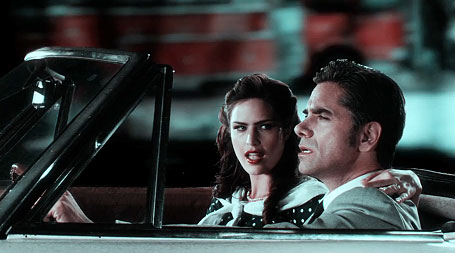
Finally, after almost six years of writing this blog, I have reason to use John Stamos’ name in a post title. I expect my traffic to explode accordingly. People are Googling “John Stamos,” right?
But seriously, this is a pretty gorgeous video for Try to Sleep, the first single off Low’s newly released album C’Mon.
Turns out, Stamos, who looks very Mad Men-esque here, is a fan of the band: “I’m actually good friends with their producer Matt Beckley, and he had played me some of the record while they we’re making it, which I loved. Ironically it turns out I was a big fan of one of their older songs Cue the Strings … I’m a sucker for a well written song with great harmonies, and when it came time for them to cast the video, they asked if I’d like to be involved, I liked the concept I was happy to be a part of it. The new record is on all the time at my place. One of my favorite indie bands.”
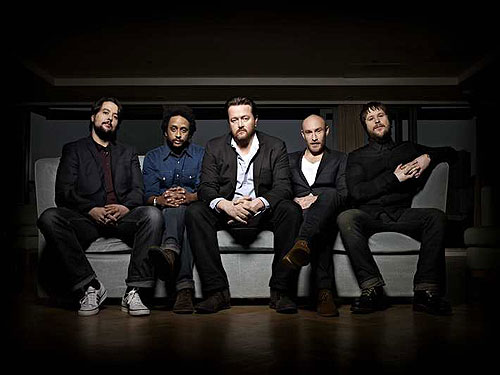
Sometimes, these moments can be subtle, which seems to be the case on the new album build a rocket boys!, a mostly subdued but elegant offering. That said, I probably overlooked Open Arms upon my initial handful of listens. But then I saw a video of Elbow performing the song live for Comic Relief as part of Red Nose Day, and, well, when you add a children’s choir and put the song’s chorus – “We got open arms for broken hearts – in this context of helping the needy, it’s hard not to get wrapped up in the power of it.
The band also released an official video for the song (albeit an edited version, by about 40 seconds or so), featuring the artwork of Oliver East:
He was cool enough to hook me up with a copy – even though it was right under my nose all this time. One of the standout songs is Career Advice, a sobering take on the putrid music industry from someone who deserves better (which is probably why those folks wouldn’t get it anyway). It’s a song every musician – hip-hop or otherwise – really ought to hear.
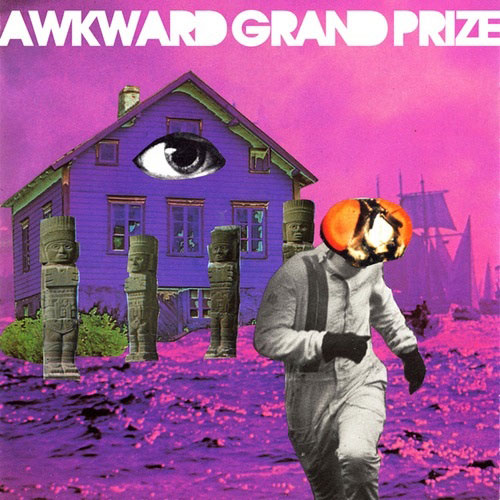
UK beatmaker Awkward, a member of the crew/label Machina Muerte, produced the track. And for his latest full-length, Grand Prize, Awkward revisited the song – now simply called Advice – for what you might call a remix of his own original, which we’ve seen him do before with Mike Eagle.
And while I haven’t gotten my hands on Grand Prize yet, I have been diggin’ on Awkward’s First Prize, a freebie mix tape of remixes and assorted loose ends. Mike Eagle shows up there, as does Isaiah Toothtaker.


 Beastie Boys, Check Your Head
  KRS-One, Return of the Boom Bap